


Topic: Finance and debt
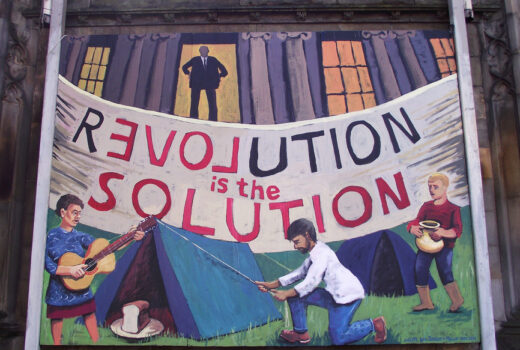
Talkin’ ‘bout a global revolution
Article / 6th January 2014As the global financial crisis now enters its seventh year, it is time to start asking difficult questions about the right priorities for popular protest if we want to realise a truly united voice of the world’s people. There can be no revolution in a truly moral or global sense until the critical needs of the extreme poor are prioritised and upheld, which will require mass mobilisations in the streets like we have never seen before.

Share The World’s Resources interviewed by WereldDelen Magazine
Article / 13th May 2013The social, environmental and economic crises that continue to reap havoc across the globe provide a critical opportunity for ordinary people to demand economic reform and political transformation, say STWR in an interview with John Habets & Henk Gloudemans.
How to mobilise $2.8tr to finance the global sharing economy
Article / 14th January 2013There are many policies that governments could implement to raise the finances needed to reverse austerity measures, tackle climate change and prevent needless poverty-related deaths. But we cannot rely on governments to change the current world direction - the only hope is a huge groundswell of popular support in favour of global sharing.
Financing the global sharing economy, part three (9): cancel unjust debt
Report / 1st October 2012This section of the report Financing the Global Sharing Economy argues that debt cancellation is an essential prerequisite for ensuring a more equitable sharing of global financial resources, and the absolute and unconditional cancellation of unjust debts should constitute an urgent priority for the international community.
Financing the global sharing economy
Report / 1st October 2012A report by Share The World’s Resources demonstrates how governments could mobilise over $2.8 trillion each year to bolster the global sharing economy and prevent life-threatening deprivation, reverse austerity measures and mitigate the human impacts of climate change.
Financing the global sharing economy, part three (1): taxing financial speculation
Report / 1st October 2012This section of the report Financing the Global Sharing Economy demonstrates how governments could raise as much as $650bn globally through a Financial Transaction Tax (FTT) to tackle poverty, reverse austerity measures and address climate change.
Financing the global sharing economy, part three (7): redistributing IMF resources
Report / 1st October 2012This section of the report Financing the Global Sharing Economy makes the case for redistributing the IMF's assets through its Special Drawing Rights facility and gold sales. These modest proposals could help restore the IMF's flagging legitimacy and prepare the way for more substantial reforms to the global economic architecture.
No tax, no justice
Article / 23rd September 2011Finding ways to increase tax revenue is critical if developing countries are to fund essential public services and reduce poverty. Global reforms to tackle tax evasion and policies to strengthen the capacity of national revenue authorities should be a top priority for development cooperation, argues Adam Parsons.
Is a ‘global social floor’ the right path for ending poverty?
Article / 31st March 2011An internationally coordinated effort to secure universal social protection may not address the structural factors which make people vulnerable to poverty, but it could represent a major step forward in the fight against needless suffering and deprivation, argues Adam Parsons.
Share The World's Resources joins 'World Bank out of climate finance' campaign
News / 9th December 2010Plans to hand control of global climate funds over to the World Bank – an undemocratic institution recognised as one of the main drivers of current unsustainable development trends – are being met with stiff opposition. In an open letter to the governments of the world, STWR joins the call to keep the World Bank out of climate finance.