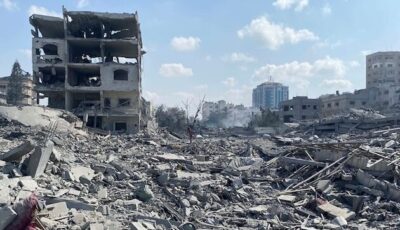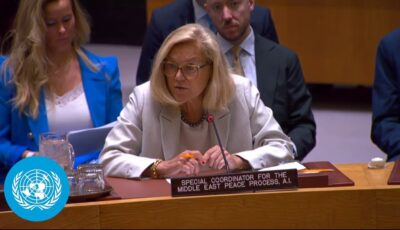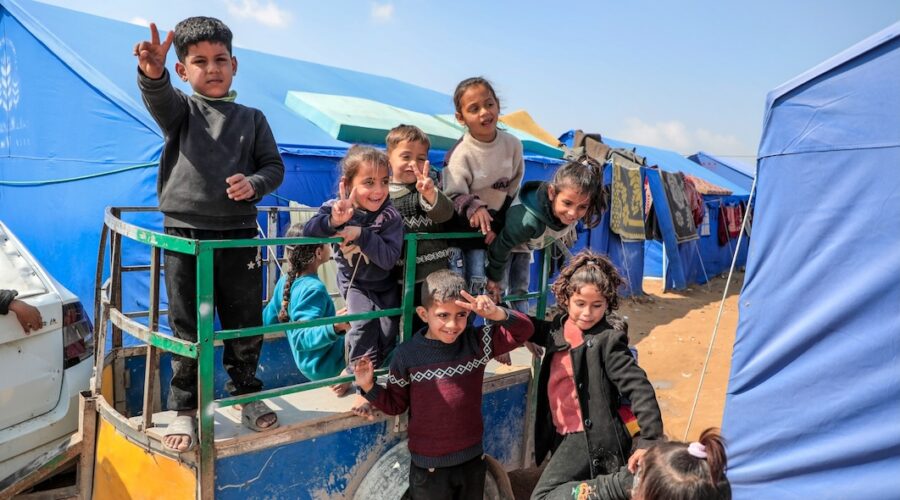
Although the Gaza Strip is no longer officially enduring famine, a majority of Palestinians there are suffering “crisis or worse” levels of hunger in an emergency that is expected to worsen in the coming months if Israel’s bombardment and siege—which many experts say is a key component of an ongoing genocide—continue. Reported by Brett Wilkins for Common Dreams.
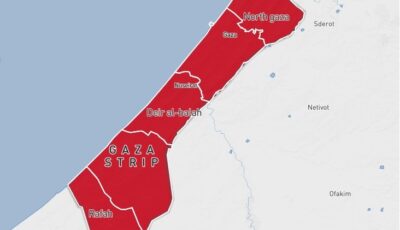
The Integrated Phase Food Security Classification—which ranks food security levels on a scale of 1 to 5—on Thursday published an analysis showing that from mid-April to the end of June, more than 1.2 million people, or 59% of Gaza’s population, were experiencing IPC Phase 3 (crisis) or worse levels of food insecurity. This included about 212,000 people in IPC Phase 4 (emergency). All five Gaza governorates were classified as being in Phase 3.
“After two years of conflict, the October 2025 ceasefire has led to measurable gains in humanitarian access and overall conditions across the Gaza Strip,” IPC said in a statement. “However, the situation remains deeply fragile, with civilians continuing to endure harsh conditions.”
This marks an improvement from a year ago, when a “worst-case scenario” was developing into a Phase 5 (catastrophe) famine that was formally declared by the IPC in August 2025. At least hundreds of Palestinians, many of them children, have died from malnutrition since Israel launched its US-backed war on Gaza in retaliation for the Hamas-led attack of October 7, 2023.
The IPC declared last December that while Gaza was no longer in a famine, the situation remained critical for the war-ravaged Palestinians there. The new IPC report warns that two-thirds of Gaza’s population are projected to face Phase 3 crisis conditions by the end of the year.
The organization also said that 74,200 Palestinian children under the age of 5 in Gaza will likely need treatment for acute malnutrition through next April.
Responding to the new IPC data, United Nations Children’s Fund Executive Director Catherine Russell said Thursday that “acute malnutrition has fallen, but many children are still going hungry, and some children may never fully recover from prolonged lack of proper nutrition.”
“This progress shows that when humanitarian access improves and aid gets through, children can be pulled back from the brink,” she added. “But it rests on a supplementary feeding program that doesn’t reach all children, and where funding is running out.”
Israeli forces have killed or wounded more than 250,000 Palestinians since then, and forcibly displaced, starved, or sickened over 2 million others since then, resulting in worldwide allegations of genocide embodied in an International Court of Justice case filed by South Africaat the end of 2023 and now formally supported by nearly 20 nations.
Leading global famine experts accused Israel of deliberately starvingPalestinians in Gaza. The International Criminal Court arrest warrants issued in late 2024 for Israeli Prime Minister Benjamin Netanyahu and Yoav Gallant, his former defense minister who ordered the “complete siege” of Gaza, accuse the pair of crimes against humanity and war crimes, including murder and forced starvation.
Like many members of their public, Israeli and US officials under both the Biden and Trump administrations initially denied that Israel was starving Gazans. However, Israeli officials warned in private that Gaza was facing starvation, while US President Donald Trump, Vice President JD Vance, and other administration figures have acknowledged that Palestinians were starving to death in the strip. That did not stop them from continuing to give billions of dollars in US armed aid to Israel.
In response to the new IPC report, acting United Nations World Food Program Executive Director Carl Skau said that “there is progress on food security in Gaza, but it is fragile and can easily be reversed.”
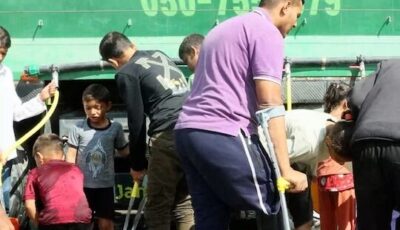
“The overall humanitarian situation remains brutal: Families lack water, sanitation, and medicine,” Skau added. “We need sustained access, funding, and stability so people of Gaza can begin recovery.”
The heads of various United Nations agencies concurred that a lasting peace—which Israel is not allowing as it continues bombing and besieging Gaza despite a nominal nine-month ceasefire—is imperative for that recovery.
“Food security in Gaza cannot recover unless local food production starts again and farmers, herders, fishers, and other producers can rebuild their livelihoods,” UN Food and Agriculture Organization Director-General Qu Dongyu said on Thursday. “Producers need access to farmland and the sea, and to seeds, tools, livestock supplies, and other agricultural inputs, as well as technical support.”
“Restrictions on agricultural imports and humanitarian supplies must be lifted,” Qu added. “Without these essentials, food production, and security will remain a pressing situation.”
The IPC said that “recent gains remain fragile,” and that “advancing peace plans is essential to support recovery, enable the safe return of displaced populations, and help households rebuild their livelihoods.”
Brett Wilkins is a staff writer for Common Dreams.
Original source: Common Dreams
Image credit: Mohammed Ibrahim, unsplash